
Bulleen’s foundation challenges come from a combination of factors that are specific to the suburb’s location, soil conditions, and the age and type of its housing stock:
Reactive Clay Soils Close to the Yarra Corridor
Bulleen’s position alongside the Yarra River corridor means its soil conditions are influenced not only by Melbourne’s typical reactive clay but also by greater moisture fluctuations associated with proximity to the river. Soils near waterways often retain higher moisture levels through winter and spring before drying significantly during extended dry periods. This increased variation in soil moisture can lead to greater ground movement and increased stress on building foundations.
A Predominantly Mid-Century Housing Stock
Much of Bulleen’s residential development occurred between the 1950s and 1970s. While these homes were generally built to a high standard, many are now more than 50 years old. Traditional foundation systems such as strip footings and timber stumps were not designed to withstand decades of ongoing reactive soil movement, making foundation settlement and structural movement increasingly common.
Large Established Trees and Garden Plantings
Bulleen’s larger residential blocks and mature gardens often feature substantial trees located close to homes. These trees can extract significant amounts of moisture from surrounding soils, creating localised shrinkage beneath or adjacent to foundations. During extended dry periods, this moisture loss can contribute to measurable foundation settlement and structural movement.
Sloped Sites Along the Yarra Corridor
Many properties located on streets that descend toward the Yarra River are built on naturally sloping land. Sloped sites introduce additional challenges because the ground is subject to both vertical settlement and lateral movement. Retaining walls, embankments, and cut-and-fill construction methods can further influence site stability and must be carefully assessed when diagnosing foundation issues and designing repair solutions.
The warning signs of foundation movement in a Bulleen home are generally consistent with those seen across Melbourne. However, understanding them in the context of Bulleen’s housing stock and site conditions is particularly important:
If several of these warning signs are present in your Bulleen home, a professional inspection is recommended. We can assess the condition of your foundations, identify the cause of any movement, and provide clear advice on the most appropriate repair solution.
The mid-century brick homes that define much of Bulleen’s residential character — including solid double-brick and brick veneer homes built between the 1950s and 1970s — are among the most rewarding foundation repair projects we undertake. These homes were built to last, and with the right foundation repairs, they can continue to perform well for many decades to come.
The most common foundation repairs for mid-century Bulleen homes involve underpinning existing concrete strip footings that have settled unevenly due to long-term reactive clay movement, or replacing deteriorated timber stumps with new concrete or steel supports through reblocking. In some cases, a combination of both solutions may be required. Every property is assessed individually so we can recommend the most appropriate repair strategy based on the specific site conditions and structural requirements.
One of the reasons these homes are so rewarding to work on is that the structure above the foundations is often still in excellent condition. A well-constructed 1960s brick home with properly repaired foundations can provide decades of reliable performance, making foundation repairs a worthwhile investment in the property’s stability, structural integrity, and long-term value.
Bulleen’s topography, particularly in areas that slope toward the Yarra River, means that many properties are built on sloping sites where foundation challenges can be more complex than those encountered on level ground.
Sloped sites introduce additional forces on foundations and retaining walls, including lateral soil pressure. Over time, retaining walls may begin to lean, crack, or show signs of movement, especially if they were constructed without adequate drainage systems to relieve hydrostatic pressure building up behind the wall.
As part of our foundation inspection process, we assess retaining wall performance and overall ground stability on sloping sites throughout Bulleen. Where retaining wall movement is linked to the same soil conditions affecting a home’s foundations, we develop a solution that addresses both issues together. Stabilising only the foundation or only the retaining wall often fails to resolve the underlying cause of the movement, making a coordinated approach essential for a long-term result.
Living close to the Yarra River is one of Bulleen’s most desirable features. The river corridor, shared pathways, parklands, and established vegetation make the area one of Melbourne’s most attractive inner north-eastern suburbs. However, proximity to the Yarra also influences the soil conditions beneath many local properties and, consequently, the performance of their foundations.
Soils located near the Yarra River corridor often retain higher levels of natural moisture than those found further inland. In Melbourne’s reactive clay environment, this means the soil can experience greater changes in volume as moisture levels fluctuate throughout the year. During extended dry periods, these soils may shrink significantly as moisture is lost, increasing the potential for ground movement and foundation stress.
While being close to the river does not automatically result in foundation problems, it does mean that soil conditions on some Bulleen properties can be more variable than the Melbourne average. For this reason, soil testing and site-specific assessment are particularly valuable when investigating foundation issues or designing an underpinning solution for properties located near the Yarra corridor.
We provide the full range of foundation repair and underpinning services across Bulleen and the surrounding north-eastern suburbs:
Underpinning
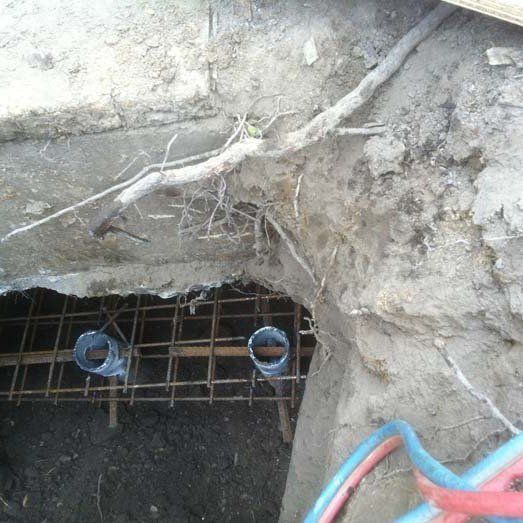
For homes affected by foundation settlement and structural movement caused by reactive clay soils, underpinning provides a long-term solution. Reinforced concrete pier footings are installed to extend the foundations beyond unstable soil layers and into stable, load-bearing ground, helping to prevent further movement and restore structural stability.
Reblocking & Restumping
For older homes supported by timber stumps, reblocking replaces deteriorated supports with new concrete or steel stumps. This process helps restore level floors, improve structural support, and reduce ongoing foundation movement. Every stump is individually assessed to ensure only necessary work is carried out.
Screw Piling
Where conventional underpinning is not the most practical solution due to restricted access, variable soil conditions, or a desire to minimise excavation, screw piling provides a fast and effective foundation support system with reduced disruption to the property.
Micropiling
For properties with limited access, restricted subfloor clearance, or areas that cannot be reached using standard foundation equipment, micropiling offers deep foundation support using compact specialist machinery designed for challenging site conditions.
Retaining Wall & Slope Stabilisation
On sloping sites where retaining wall movement or embankment instability is contributing to foundation issues, we provide stabilisation solutions that address both the structure and the surrounding ground conditions to achieve a long-term outcome.
Crack Repairs
Effective crack repairs begin with stabilising the underlying foundation. Once the source of the movement has been addressed and the structure has stabilised, we carry out repairs designed to provide a durable and lasting finish.
Targeted Foundation Repair
Not every property requires extensive foundation work. Where movement is confined to a specific area, targeted repairs can often provide the most practical and cost-effective solution. Every property is individually assessed to determine the most appropriate scope of work.
Our team covers Bulleen and all surrounding north-eastern suburbs including:
Bulleen, Balwyn North, Templestowe Lower, Templestowe, Doncaster, Doncaster East, Heidelberg, Heidelberg Heights, Rosanna, Ivanhoe, Eaglemont, Viewbank, Macleod, Watsonia, Greensborough, and the broader Manningham, Banyule, and Nillumbik council areas.
If your suburb isn’t listed here, give us a call — we cover a wide area across Melbourne’s north-east and the chances are we service your location.
Bulleen is a suburb where homeowners value quality construction and long-term results. Many properties in the area have been carefully maintained over the decades, and when foundation issues arise, they deserve solutions that are designed to last.
We take a practical and honest approach to foundation repair. Every project is thoroughly assessed, the most appropriate repair method is selected for the site’s specific conditions, and engineering certification is provided where required. With decades of experience working throughout Melbourne’s north-eastern suburbs, we understand the local soil conditions, housing styles, and foundation challenges unique to areas like Bulleen.