
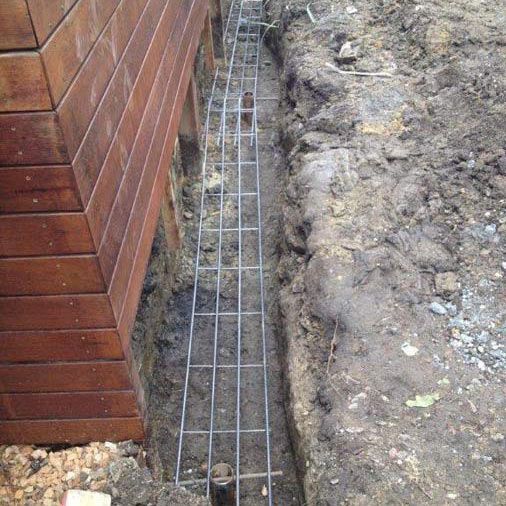
Interwar housing stock on timber subfloor construction – The California bungalows, Edwardian homes, and Depression-era estates that define Murrumbeena’s streetscape were almost all built on timber subfloor systems — floor frames carried on timber stumps sitting on pad footings. At 80 to 100 years old, those subfloor systems are at or past the point where deterioration is a common finding. Uneven floors, sticking doors, and gaps along skirting boards are the usual early signs, and they’re frequent presentations in Murrumbeena’s older housing stock.
Sandy south-east soil — free-draining but with its own vulnerabilities – Murrumbeena sits on the same historically sandy, free-draining soil that runs through this part of Melbourne’s south-east — the legacy of the market garden belt that once characterised the area. This soil profile doesn’t have the dramatic seasonal swelling of Melbourne’s reactive clay suburbs, but it has its own vulnerabilities around drainage, erosion, and the reliability of conventional excavated foundation methods. It’s one reason screw piling is often our preferred approach here over traditional bored piers.
Significant development pressure around the station precinct – Murrumbeena was designated a State Government Activity Centre in 2025, with major high-density development being fast-tracked around the station. Combined with the ongoing knock-down rebuild activity happening throughout the suburb, established property owners are increasingly adjacent to construction activity, with the foundation implications that brings. If significant development is happening near your Murrumbeena property, getting the existing foundation condition documented beforehand is a sensible precaution.
The elevated rail rebuild and rail corridor properties – The level crossing removal and station reconstruction along the Murrumbeena rail corridor involved significant construction works. Properties near the corridor that experienced cracking or movement during or after that construction period are worth having properly assessed if they haven’t been already.