
Many of Melbourne’s heritage homes can be classified as some of Australia’s most beautiful and historically significant homes, with Victorian terraces, Edwardian cottages, Californian bungalows and Federation-era properties lining streets and streets across the inner suburbs! Unfortunately for some of these homes, the foundations/footings were not originally designed to endure long-term; resulting in numerous homes sitting (or partially) on old foundations.
The experts at Harman Contracting understand that historic homes require different considerations when underpinning them, compared to contemporary structures. Therefore, our team has significant knowledge of the inherent value of these historic properties, and we will ensure that no damage occurs to either the heritage home itself or any of its historical attributes while achieving stability.
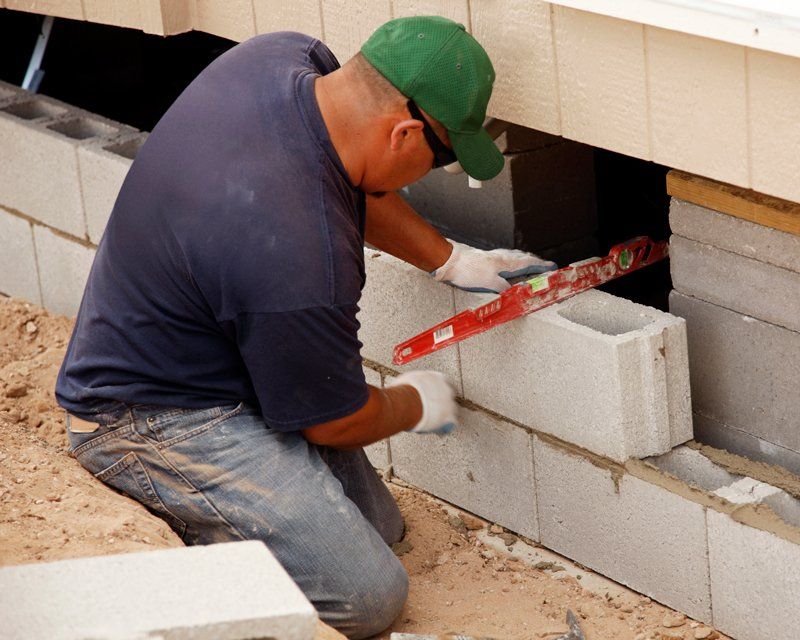
Houses with a rich history in Melbourne are built with an original design based on the time frame but foundation footings from timber and/or bluestone were never designed to sustain over 100 years of soil movement and moisture changes, or the stress of other buildings around them as they currently exist.
Melbourne is also a city that has clay based soil, which increases the challenge. Clay soil expands when wet, then shrinks back when dry… this cycle of expansion & contraction places tremendous stress on the original foundations of an older house that were never meant to flex or move. The end result is always the same; the house suffers through cracked walls, uneven floors, doors and windows that no longer sit straight, and a foundation that has been stealthily collapsing for years on end.
Heritage property renovations can be challenging and require sensitivity toward the heritage property. You cannot simply bring in heavy machines and treat it like a modern home built with concrete slabs. Heritage property repair requires specifically designed methods, equipment that will work within the limits of most older homes’ access, as well as a crew that knows how to perform on-site work in a heritage property.
From our past experience with various projects, we at Harman Contracting have become experts in building solutions for heritage and listed properties throughout Melbourne (for example, Fitzroy, Richmond and Collingwood). Each project has its own personality and its own set of issues which we will adapt to by providing a tailored solution.
The initial step to all projects is to conduct an on-site inspection, evaluating the condition of the existing foundations, determining the cause and extent of the movement and formulating an appropriate repair plan to remedy the problem with minimum disturbance to the building fabric. If required, we can work with structural engineers and arrange for onsite soils testing to ensure a solution that is appropriate to specific site conditions.
The types of underpinning that we use for heritage properties is done using methods suitable to the constraints of such properties, such as conventional pier underpinning, screw piles, bored piers and micropiles where accessible is limited. Our small excavator designed to assist in these construction activities is a huge benefit due to our ability to use this equipment in confined work areas and access tight side yard areas without requiring large machines that create a disruption.
The team at our company also has familiarity with the Heritage Overlay requirements by the Heritage Council of Victoria. If your property is included on the Victorian Heritage Register or is located in a Heritage Overlay Zone, there are specific rules governing what works may and may not be approved and you will require to obtain permits for any work you intend to complete prior to commencing those works. We will assist you with understanding the process necessary to obtain permission to proceed with your project.
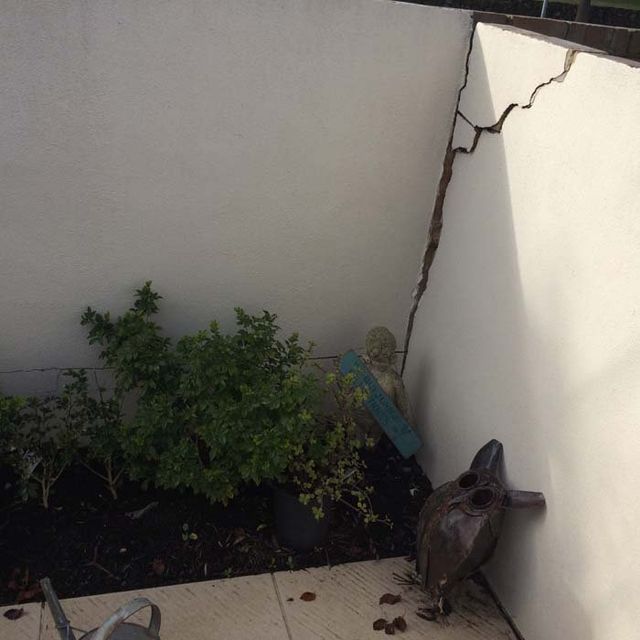
Foundation movement is very easy to see through the cracks that occur in either internal walls or external walls. In older heritage style homes, cracks will appear around doorways, window frames and at the corners of rooms. If the underlying cause of the movement is not fixed, these small hairline cracks can quickly turn into larger and more serious cracks.
Older homes that are built on timber stumps tend to have the most issues with floor movement. When a stump rots or settles unevenly, it will cause the floor above it to move as well. A floor that is bouncy or has a noticeable slope across the length of the floor is a sure sign that the stumps below the floor need to be fixed.
When any building moves, the openings within that building also move. Doors and windows, that were once able to be opened and closed smoothly, will now begin to stick; jam; or not sit squarely. This is a good early warning sign that the foundation level of the home is shifting.
If there are gaps between any skirting boards and floors; between cornices and walls; or between door frames or window frames that are getting wider, this could be due to building movement caused by issues with the foundation.
Rising Damp and Salts Damp cause problems primarily for older masonry walls, particularly near Bay waters or near old drainage systems. Signs of damp and/or salt include bubbling paint; crumbling plaster; and a continuing smell of dampness or mildew.
Watch for these warning signs: