
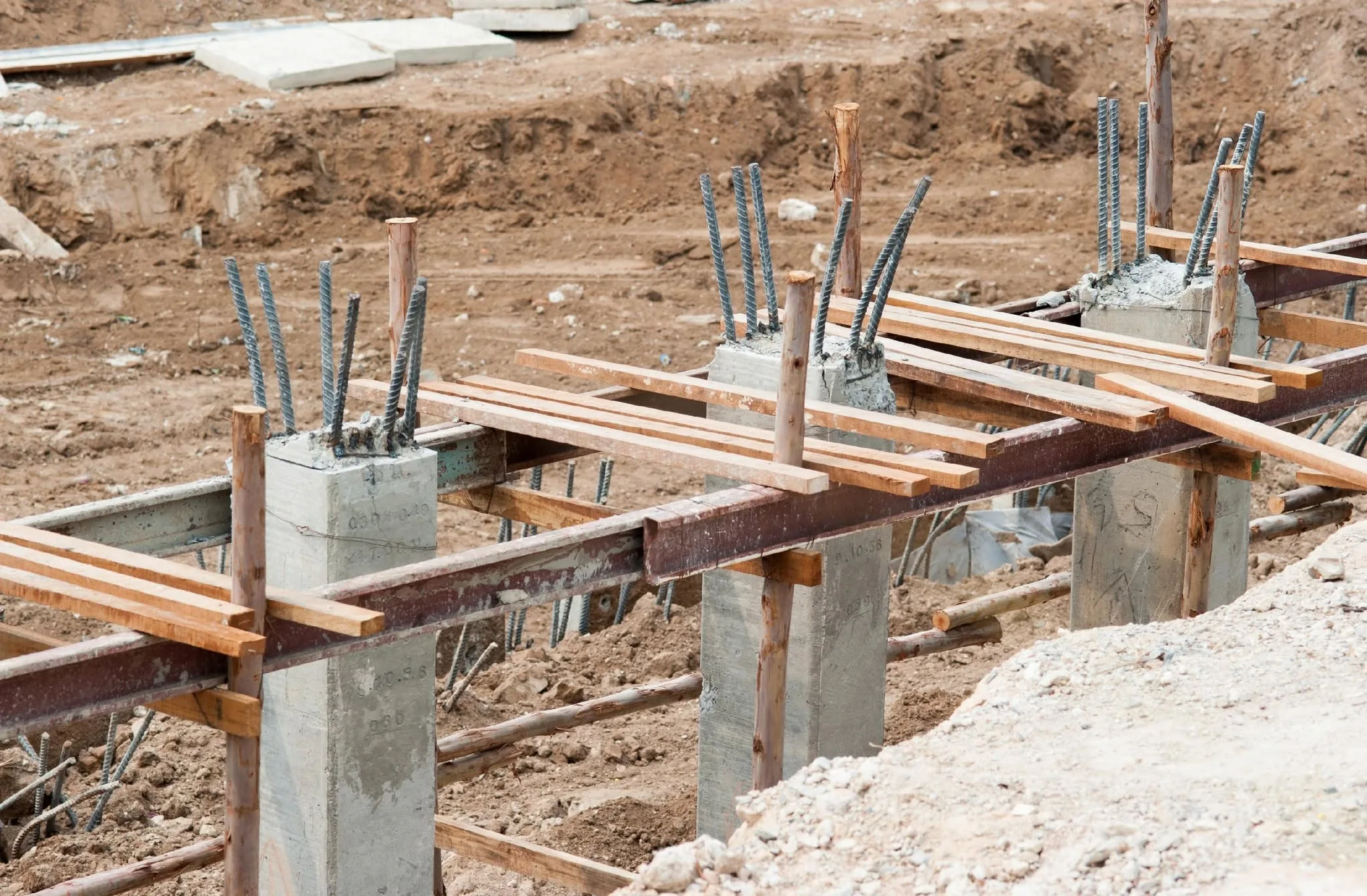
A legacy of sandy, free-draining market garden soil – Bentleigh’s original appeal to nineteenth-century market gardeners was its sandy, easily worked soil and the springs and watercourses that once ran through the area toward Cheltenham. That sandy soil profile hasn’t disappeared just because the market gardens have been replaced with houses. Sandy soil behaves very differently to Melbourne’s reactive clay: it doesn’t swell and shrink dramatically with the seasons, but it offers different load-bearing characteristics, drains more freely, and can be prone to specific problems like erosion around foundations or instability in conventional excavated pier holes.
A genuine mix of housing eras, each with its own foundation story – Bentleigh’s streetscape is a layered one—interwar garden suburb development sits alongside post-war housing and increasingly, medium-density apartment buildings. The California bungalows and Edwardian weatherboards that give the suburb much of its character typically date from the 1920s and 1930s, meaning their original footings have had roughly a century to interact with this sandy ground. Post-war brick veneer homes added through the 1950s and 1960s bring their own construction characteristics into the mix.
Old watercourses and springs beneath parts of the suburb – The historical record of springs in several places and watercourses running through the area toward Cheltenham is worth taking seriously from a foundation perspective. Even where these original water features have long since been built over or piped underground, the soil along their former paths often retains different drainage and moisture characteristics to the surrounding ground—something we factor into our assessment where a property’s history or location suggests it might sit near one of these former watercourses.
A level, established streetscape with a grid layout – Unlike some of Melbourne’s hillier eastern suburbs, Bentleigh’s grid-pattern streets sit on relatively flat, level ground. This removes the lateral slope movement and retaining wall considerations that complicate foundation work in suburbs like Ivanhoe, but it doesn’t mean Bentleigh properties are immune to settlement, particularly where sandy soil has been disturbed by decades of construction, landscaping, and drainage changes.
Foundation assessments tailored to local ground conditions – Every property in Bentleigh has its own history of soil movement, drainage changes, and construction methods. Understanding the interaction between sandy soils, historical watercourses, and different housing eras allows foundation assessments and repair recommendations to be better matched to the specific conditions of each site.
Identifying the actual soil profile on each property – Bentleigh’s sandy legacy soil isn’t necessarily uniform across every property. Decades of development, fill, and landscaping mean ground conditions can vary from block to block. We assess the actual conditions on each site rather than assuming a single soil story applies suburb-wide.
Defaulting toward screw piling where sandy conditions are confirmed – Where genuinely sandy, free-draining soil is present, we lean toward screw piling as a more reliable method than conventional bored pier excavation, avoiding the collapse risk that open holes face in this type of ground.
Respecting Bentleigh’s California bungalow and Edwardian character – For the suburb’s older interwar and Edwardian homes, we apply the same care to original features such as leadlight windows, decorative gables, and original timber detailing while addressing the foundation issues specific to a century of settlement in sandy ground.
Investigating drainage history where relevant – Where a property’s location suggests it may sit near a former watercourse or spring line, we factor this into our assessment of why settlement might be occurring in a specific pattern.
Screw Piling – Our most frequently recommended method in Bentleigh given the suburb’s sandy soil profile, providing reliable foundation support without the collapse risk conventional bored piers can face in this ground type.
Underpinning – Where conditions suit conventional methods, we install new footings to address foundation settlement on Bentleigh properties of any age.
Reblocking & Restumping – For Bentleigh’s older California bungalows and Edwardian weatherboards on original timber stumps, we replace what’s deteriorated and restore the home to level.
Foundation Repair for Drainage-Related Settlement – Where erosion or water concentration around specific points has caused localised settlement, we address both the structural repair and the underlying drainage issue.
Crack Repairs – Carried out once the underlying cause, whether soil erosion, stump deterioration, or general settlement, has been properly addressed.
We work regularly across:
Bentleigh, Bentleigh East, McKinnon, Ormond, Brighton East, Brighton, Hampton, Carnegie, Caulfield South, Glen Huntly, and the broader City of Glen Eira and City of Bayside council areas.
If your suburb isn’t listed here, get in touch — we cover a wide stretch of Melbourne’s south-eastern bayside-adjacent suburbs and the chances are good we service your specific location.