
Foundation settlement & sinking
Settlements & Sinking will occur when there is an issue with the soil below the foundation as it is no longer able to support the weight of the structure. This happens due to:
– Erosion
– Saturation
– Shrinkage
When a settling foundation is created it is catastrophic to the building above due to the amount of stress being applied to the building above all due to unevenness of the settling.
Foundation cracking
Cracking will occur to the foundations due to any number of forces acting upon them that exceed the ability of concrete and/or masonry to withstand the tension created by the aforementioned loads, soil movements and/or thermal expansion/contraction. This cracking, if left undeterred will allow water to penetrate the foundation and degrade both the foundation and surrounding area and continue to diminish the load capacity of the foundation.
Reactive Clay Movement
Melbourne is one of the most reactive clay-prone regions in the world, with soils that expand significantly when wet and contract during dry periods. This continual cycle of movement places ongoing stress on building foundations and can lead to structural issues over time. Many older Melbourne homes were constructed before the long-term effects of reactive clay soils were fully understood and, as a result, may not have foundations designed to accommodate this movement.
Deteriorated Timber Stumps
Timber stumps were widely used in the construction of thousands of Melbourne homes and many are now approaching or have exceeded their intended lifespan. As timber stumps deteriorate, settle, or tilt, the structure above can begin to move unevenly. Common signs include wall cracking, uneven floors, and doors or windows that no longer operate correctly.
Subsidence
Subsidence occurs when the ground beneath a building gradually sinks. This can result from soil compaction, erosion, groundwater movement, or the formation of voids beneath foundations. While the symptoms often resemble those caused by reactive clay movement, the underlying causes are different and may require a different repair approach.
Erosion of Foundations
Water from leaking pipes, poor drainage, or excessive groundwater can gradually wash away fine soil particles beneath and around foundations. Over time, this erosion creates voids that can lead to either rapid or gradual foundation settlement. If left unaddressed, foundation erosion can have serious consequences for the structural integrity of the building above.
Standard pier underpinning
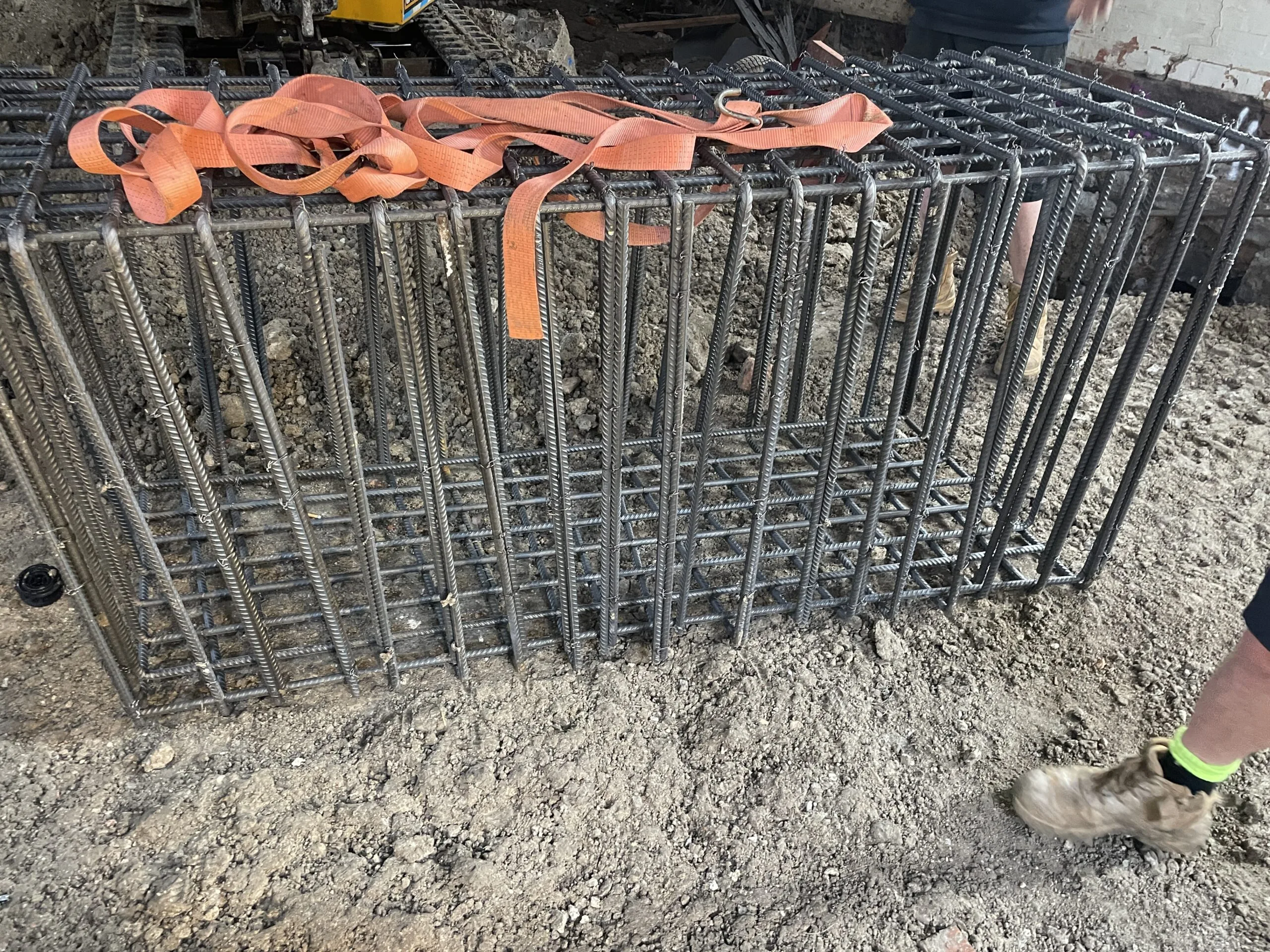
The most popular way to renovate foundations of all types of homes and businesses in the Melbourne area is with standard pier underpinning. Reinforced concrete piers are dug next to or underneath existing foundations until they reach stable load bearing soil. Once the piers have had their reinforcing steel placed and the concrete has cured, the structure now has a new permanent temporary support that will stop any more movement of the structure and restore its structural integrity.
Screw piling
High quality steel piles are hydraulically turned into the ground. They are installed through unstable soils to stable bearing materials without needing large amounts of excavation. It is faster to install than conventional pier underpinning, not as disruptive to your neighbours, and they will be able to support loads immediately — there is no waiting for the concrete to cure. They are most commonly used in locations where there is sand or where there is a need to keep disruption to a minimum.
Bored piers
Where a foundation problem needs a deep support, bored piers are drilled and then filled with reinforced concrete to give deep and permanent foundation supports on which the structural loads of the building will rest.
Micropiling
Micropiling is the solution when conventional underpinning or traditional piling cannot be used because of limited access for machinery. Micropiling is a type of deep foundation support using special equipment that can work in a low headroom or tight access area. Typical applications for micropiling include inner city terrace homes, historical properties and commercial buildings where work cannot be conducted in confined areas.
Reblocking & Restumping
Reblocking/restumping is a method used to restore older timber stumps of Melbourne homes that have deteriorated to their original level by using new concrete or steel replacement stumps to level up the house or prevent the house foundation from further settling or heaving. In doing this, most homes lack full underpinning and/or additional supporting footings. We conduct an assessment of your stumps and footings during the inspection, at which time you will be able to select the most cost-effective solution to your stumping needs.
Targeted Foundation Repair
Foundation problems do not always require total underpinning; in many cases they can be localised. Targeted foundation repair will treat the local area for the specific point or section of foundation only, not the entire foundation, thereby keeping both the cost and scope of work relative to the cause of the repairs.
Step 1 — On-Site Inspection & Assessment
In order to evaluate the overall condition of your property we will visit the site to complete a detailed evaluation. We will evaluate what is visible and then physically inspect the underside of the property to determine the reason for the foundation problems and to develop the most effective corrective action to be taken.
Step 2 — Structural Engineering & Soil Testing
If required on the majority of significant foundation repair jobs, we will develop a Structural Engineer’s Report and conduct soil tests prior to commencing any work, ensuring that the proposed repair solution is consistent with the condition of the site rather than relying on a generalised assumption of the subsurface conditions.
Step 3 — Clear, Itemised Quote
Prior to commencing any work associated with the repair solution on your property our office will provide you with a clear, itemised quote covering all elements of the proposed repair solution — no vague estimates, no hidden costs, and no unpleasant surprises at completion of the project.
Step 4 — Foundation Repair
We do the work using the methods and approaches that were specified in the quote provided. We accomplish tasks in an efficient and timely manner, communicate as needed throughout the project, and deliver what we agreed to do. Our workers are experienced, our equipment is specifically designed for the task at hand, and we do not cut corners on quality.
Step 5 — Engineering Certification & Completion
When the project is completed, we will supply engineering certification confirming that the repairs have met the applicable standards and that the structure now has adequate foundation support. This documentation can be valuable for insurance records, future property transactions, and providing peace of mind that the repairs have been completed correctly.
In Melbourne, we can repair foundations of any residential property. This includes: heritage listed, inner-city terraces, period style properties, new brick veneer, timber stumps etc.
Before we recommend a foundation repair to you we will inspect your property and give you our honest view as to what you require.
As a homeowner, having to deal with a foundation repair can seem very overwhelming. We understand this so we will explain what we find in layman’s language, only recommend what is actually required, and provide minimal disruption to your daily routine whilst completing the necessary work. You will most likely be able to stay at home whilst we carry out the work required.
Foundation repair issues in commercial or industrial properties have significant implications for a business’s operations because uneven flooring can cause problems with machinery, damaged walls heighten safety concerns and uncorrected structural movement can develop into higherlevel/unaffordable repairs/generate unsafe conditions impossible to correct without placing operations on hold until they are complete,
We provide foundation repair service to all sizes of all commercial and industrial properties within the Melbourne region. This includes the full range from small retail shops where minor settling has occurred at the floor plan only; to large, multi-stage foundation repair projects that involve multiple sections of a single building. All commercial projects are completed based on solid engineering practices, including having engineering approval prior to commencing work on each respective project and taking into full consideration the importance of maintaining business continuity within that property while completing repairs.
There are particular difficulties when it comes to working with heritage homes like accessing them, using the correct materials properly when doing so, and having to navigate through getting a planning permit before you can start working on a heritage listed property.
In undertaking repairs for the foundations of heritage buildings and homes across the city of Melbourne, we have considerable experience and apply methods and materials suited to both the age of the building and the construction type. We will protect any original fittings and features during the repair process. We also understand how the various local government authorities to which heritage buildings are subject in Melbourne handle planning permits.
Melbourne’s foundation repair costs differ from person to person based on a variety of factors, including nature and extent of the issue, methods required, depth of work needed, and access to the site itself. Therefore, you cannot accurately determine the cost until an appropriate assessment of the site and foundation of your property has been completed.
What we can say is we perform free, no obligation on-site quotes. We perform a complete inspection and provide detailed pricing for the work that is required on your specific property — not just a standard estimate. We also provide the best solutions to fix your foundation in the most cost-effective way. If targeted repair will address the issue, we will make that recommendation. If full underpinning must be completed, we will clarify why it is necessary.
The most reliable thing regarding the cost of foundation repair is — the longer a foundation issue remains unaddressed, the higher the cost to repair it. The earlier an issue is identified, the easier and less expensive it is to resolve than if the problem has been allowing to develop for an extended period of time.