
Do not wait for your home or building to have major problems if you notice foundation issues. Walls with cracks, sinking floorboards, and doors sticking do not repair themselves but continue to deteriorate. In Melbourne, where reactive clay soils are a typical occurrence, foundation movement is one of the primary structural problems faced by homeowners.
Harman Contracting is a family-owned business located in Melbourne that has been in business specializing in underpinning for homes, heritage buildings and commercial properties throughout the city and greater Victoria with over 45 years of combined underpinning experience. We understand Melbourne’s soil types; we understand its buildings; and we understand how to resolve all problems associated with both.
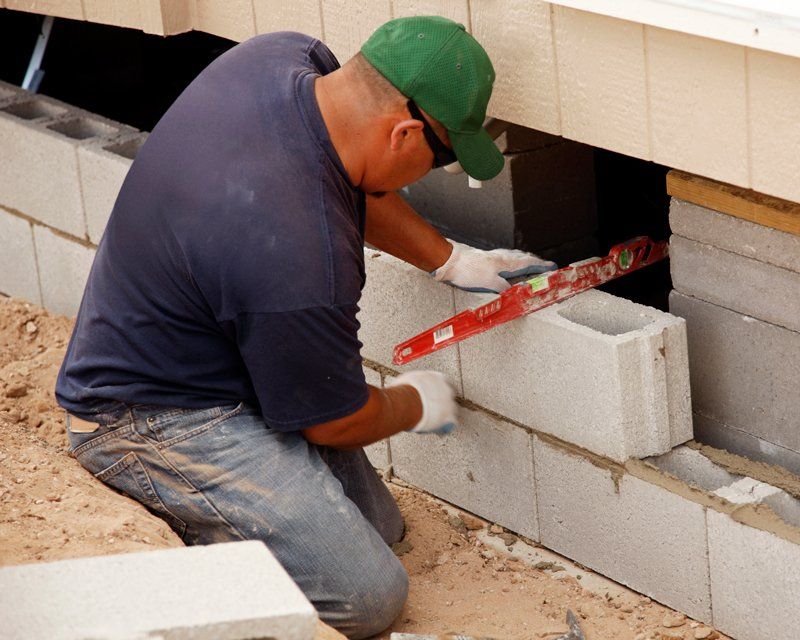
Underpinning works on existing buildings by adding strength and stability to their foundations. If the existing foundations can’t support the structure anymore due to moving ground, decay, or design, underpinning extends or replaces those foundations so that the structure is once again stable.
The most common method for underpinning is to excavate next to the existing foundation to make new pier holes below the level of stable load-bearing soil. Steel reinforcing bars are placed in those holes and then filled with concrete. After this work is done, the structure will now have a new stable base, and the movement that previously caused destruction will cease.
Underpinning isn’t simply a stopgap method of repair; done correctly, underpinning produces a long-term solution that will lease decades onto your building’s longevity.
In Australia, some of the most reactive clay soil has been found in Melbourne. When it rains, the soil will become damp and expand; when it doesn’t rain and the temperature is high, the soil will become dry and shrink. Because of this cycle of expanding and contracting, the ground will move; and as a result, buildings sitting on the ground will also move.
The continual moving of the ground causes foundation problems due to the age of the buildings’ very foundations, which were constructed under much older and more lenient codes, combined with other factors such as older timber stumps, trees drawing moisture from the soil, leaking pipes or excavation adjacent to your house. Because of all these different reasons, foundation problems have become common throughout Melbourne’s suburbs.
In Melbourne, there are a number of factors that may contribute to movement of the foundations, such as:
Most foundation issues do not happen quickly; instead, they take time – months, or even years, to develop. The initial signs that there are issues will often be disregarded by many homeowners at first but will eventually lead to greater concerns. Follow these items closely so you can catch any issues before they become a large enough problem to warrant expensive repairs:
Cracked walls – Look for diagonal cracks radiating from the corners where a window or door meets the wall; a second indicator is the presence of stair-step type cracks in your brick walls.
Sinking or unlevel flooring – If your flooring feels spongy or springy beneath your feet, or if you can see that it is sloped, the foundation under it may be shifting as well.
Sticky doors and windows – If the frame of your door or window is no longer square to the opening, it is possible that it will cause jamming of your door/window, and therefore you should consider having professional inspection done sooner than later.
Separations – If you notice gaps between the ceiling and wall, floor and wall, or around the casements or skirting boards, you may have a foundation issue developing.
Visible stump deterioration – The posts/stumps holding your house up are severely rotted, leaning, or crumbling away, and suggest that they will fail very soon.
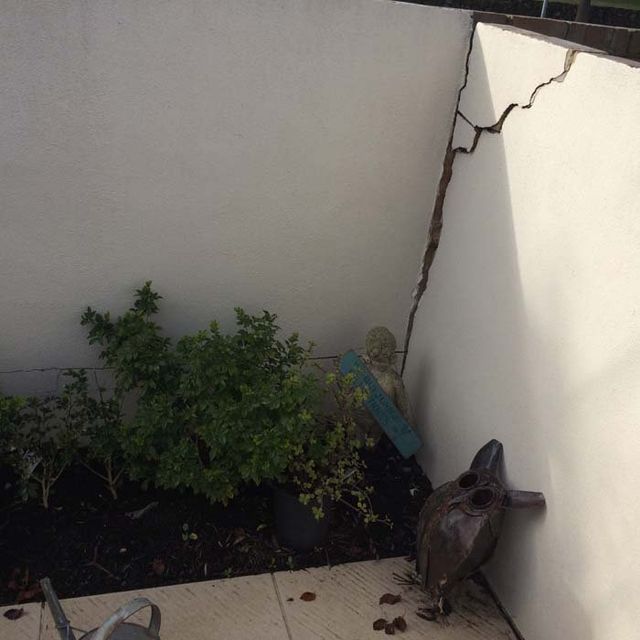
If you are observing any of these warning signs within your home, it is important to arrange for the proper professional services to inspect the integrity of your foundation immediately. Costs involved in a repair of this magnitude will continue to add up if repairs are not made as soon as possible after the issue occurs.
We do not believe in a standardized fix for all properties. Each property has unique characteristics, each soil type is distinctive; likewise, each foundation issue presents distinct problems and has its own particular solution. The following describes how we conduct all underpin project sites:

We visit your property to evaluate any damage done to the building, as well as what is occurring with regards to the foundation being evaluated. From there we identify what caused the movement and develop the best possible solution.

When appropriate, we arrange for engineering drawings and conduct soil analysis to ensure all underpinning solutions are developed specifically based on each site and soil type.

We excavate next to the existing foundation, and install new pier holes to the required depth (to reach stable subsoil), and install pier reinforcement for further inspection before pouring concrete.

After completion of any new installations, we will provide an engineer’s stamp (if required) indicating that your building has an permanently strengthened foundation; and, that movement associated with the original damage issues has been resolved.
We have experience and expertise working with a variety of residential property styles throughout the Melbourne area, including – but not limited to – single-fronted Victorian terraced homes, Federation bungalows, post-war brick houses, inner-city attached or town and rowhouses and everything beyond. Your residential property can be newly constructed or in a state of ongoing slump/settling issues; we will thoroughly evaluate your residential structure and corresponding property to determine the correct fix for you.
Our team also has extensive experience with heritage-listed properties or buildings. We have extensive working knowledge of the requirements for heritage properties; all the necessary planning regulations, rules and regulations (local government and building department) that apply to all heritage homes and buildings. We also take great care not to disturb the original architecture or style of a heritage property while returning these properties to a stable condition.
Foundation issues can disrupt the day-to-day operations of a business, create unsafe working environments, and generally present businesses with liability risks.
Harman Contracting is involved with foundation underpinning across many types of commercial facilities (including offices, warehouses, industrial facilities, retail space, loading docks and car parks). We create commercial underpinning project plans that limit business downtime and deliver lasting results. We have the ability to scale our methods to accommodate all building sizes and we have full insurance on every job, with an engineering certification to back up our work.
The cost varies depending on the size of the property, the extent of the foundation damage, the depth of work required, and the method used. There’s no reliable way to give an accurate figure without seeing the property first. We provide free on-site quotes so you get a price that’s specific to your job — not a generic estimate pulled from thin air.
A straightforward residential underpinning job typically takes anywhere from a few days to a couple of weeks. Larger or more complex projects — particularly commercial buildings or properties with significant damage — may take longer. We’ll give you a clear timeframe alongside your quote.
In most cases, no. Underpinning work is carried out beneath and alongside the building, so internal living spaces remain accessible throughout. There will be some noise and activity, but vacating the property is rarely necessary for standard underpinning jobs.
Underpinning stops the foundation movement that’s causing the cracking. Once the building is stabilised, crack repairs can be carried out to restore the appearance of affected walls. Fixing the cracks without addressing the underlying foundation issue is a temporary solution at best — the cracks will return.
Yes. A structurally sound, properly underpinned home is a more valuable and more sellable property. Foundation issues identified during a building inspection can significantly reduce sale price or derail a sale entirely. Addressing the problem properly protects your investment.
Don’t wait for foundation problems to get worse. The sooner you act, the more straightforward — and more affordable — the fix tends to be. Our team is ready to come out, take a proper look at your property, and give you honest advice on the best way forward.