
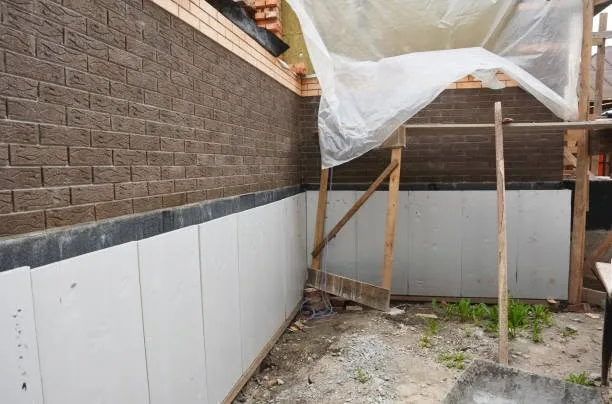
A relatively young, uniform residential housing stock – Unlike Melbourne’s older inner suburbs, Tullamarine’s residential development happened predominantly from the 1960s through to the 1980s, once the airport construction began and the surrounding township transitioned from a small farming and grazing community into a residential and light-industrial suburb. This means the bulk of Tullamarine’s housing stock falls within a fairly consistent age band — old enough now to be showing genuine foundation wear, but built using more modern construction standards than the Victorian and Edwardian terraces found in suburbs closer to the city.
Flat, exposed, largely cleared terrain – Tullamarine sits on notably flat and open ground, historically used for hay production and grazing before residential and industrial development took over. Being flat removes some of the slope-related complications seen in suburbs with significant topography, but the exposed nature of the land — subject to strong hot northerly winds in summer and cold southerly winds in winter — means evaporation and soil moisture loss across exposed allotments can be more pronounced than in suburbs with more tree cover and natural windbreaks.
Moonee Ponds Creek and its influence on residential soil conditions – Tullamarine’s residential area sits within a loop of Moonee Ponds Creek, meaning a meaningful proportion of homes are positioned relatively close to this watercourse. As with other Melbourne suburbs near creeks and rivers, proximity to a waterway can mean a somewhat higher water table and more variable soil moisture conditions than properties further from any watercourse — a factor worth considering during any foundation inspection in this part of the suburb.
A substantial industrial sector with its own foundation demands entirely – Tullamarine’s industrial precinct, concentrated particularly in the suburb’s southern section, includes everything from logistics and freight operators to manufacturing facilities and corporate offices serving the aviation and transport sectors. These properties present a foundation repair profile entirely different from the residential streets nearby — large concrete floor slabs under constant heavy vehicle and equipment loads, warehouse and loading dock settlement, and the operational continuity demands that come with commercial-scale underpinning work.
Underpinning – For Tullamarine homes and commercial buildings experiencing foundation settlement, we install new footings appropriate to the specific ground conditions found on each property.
Screw Piling – A reliable, efficient option across Tullamarine’s flat residential and industrial land, particularly useful where minimal disruption to an operating business or household is a priority.
Reblocking & Restumping – For Tullamarine’s older homes on timber subfloor stumps, we replace deteriorated stumps and restore the building to level.
Commercial & Industrial Underpinning – For warehouses, factories, and logistics facilities across Tullamarine’s industrial precinct, we deliver foundation and floor repair solutions planned around minimising operational downtime.
Crack Repairs – Carried out once the underlying foundation movement has been properly identified and addressed.
Foundation Repair Near Moonee Ponds Creek – For properties positioned closer to the creek where soil moisture conditions may be more variable, we factor this into our assessment and recommended approach.