
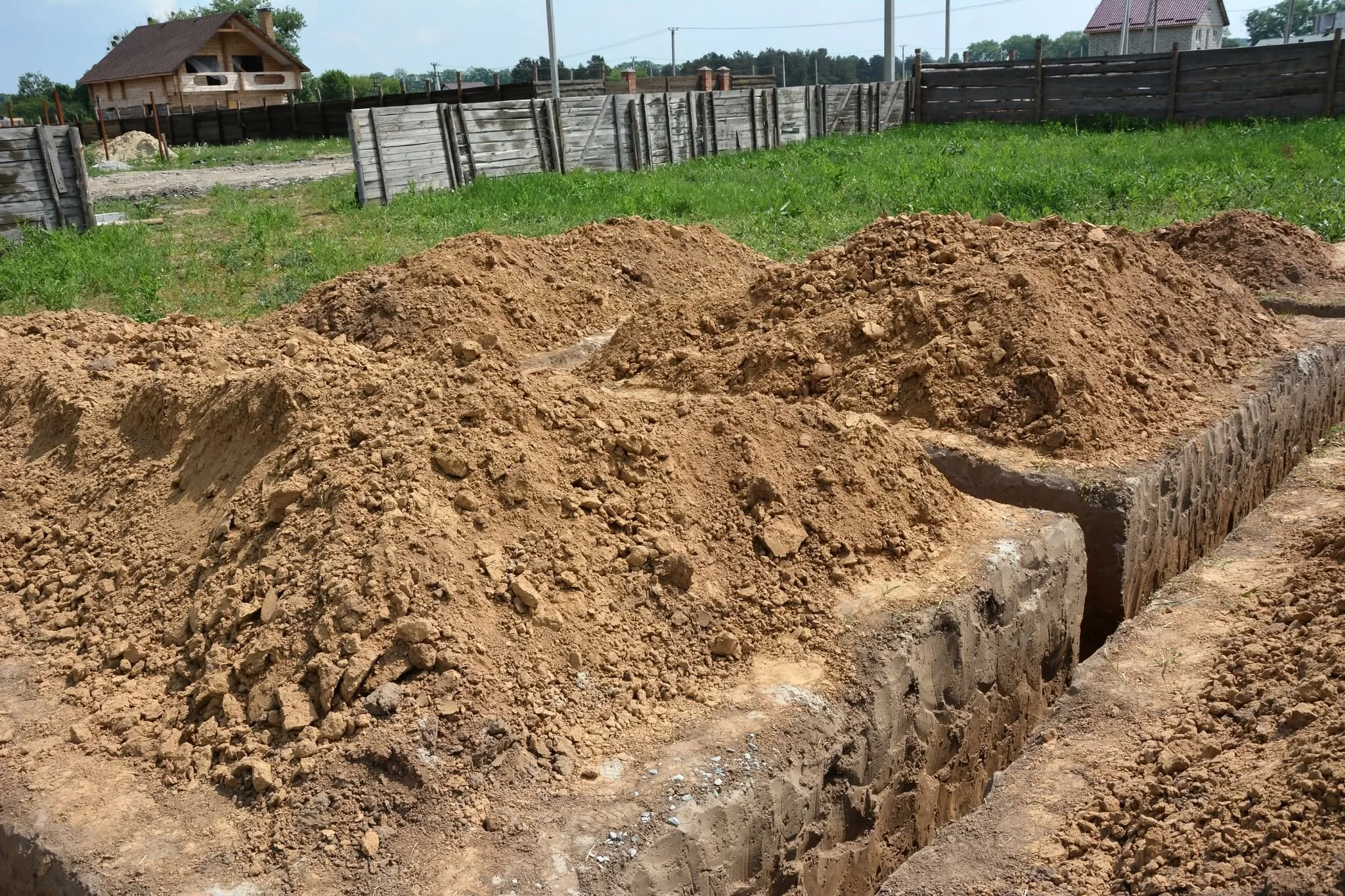
Sloping blocks — hillside drainage and differential soil moisture – Rosanna’s hilly terrain isn’t just an aesthetic feature; it has direct implications for how foundations behave. On sloping blocks, surface drainage naturally moves downhill, meaning the uphill side of a building sits on drier ground than the downhill side. That differential moisture condition across the same footing is a direct cause of differential clay movement, with one section of the foundation experiencing different soil behaviour from another. Sloping Rosanna blocks amplify the moisture variability that drives cracking in flat suburban environments, and properties on the steeper streets can experience more pronounced asymmetric cracking as a result.
Mature gum trees — the defining feature and a major foundation driver – Rosanna’s native gum trees are part of what makes the suburb distinctive. They’re also aggressive moisture extractors from clay soil, particularly through summer. A large gum tree within 10 to 15 metres of a footing pulls significant moisture from the surrounding clay on that side of the building during dry periods, drying out the soil differentially and producing cracking concentrated on the tree side of the structure. In a suburb with Rosanna’s level of established native vegetation on large blocks, the tree-and-clay relationship is the single most common driver of the cracking patterns we see.
Post-war 1950s–60s construction on clay soil – Rosanna’s housing was built almost entirely in a single compressed window — the late 1940s through the 1960s — as Melbourne’s suburban expansion pushed through this corridor following rail access. Brick veneer on strip footings and fibro or weatherboard homes on timber stumps are the dominant construction types. At 60 to 70 years old, both are showing the foundation issues that come with this age in clay conditions: perimeter footing settlement in the brick veneer stock and stump deterioration in the timber subfloor homes. The pattern is consistent across the suburb because the building era was so compressed.
Transitional soil at the edge of the inner clay belt – Rosanna sits at a transitional point geologically between the reactive inner-north clay that characterises suburbs closer to Melbourne and the more varied basalt and alluvial profiles heading further into the Yarra Valley toward Eltham. Clay content is meaningful in Rosanna but not as uniformly extreme as the inner suburbs, and the sloping terrain introduces drainage variability that produces site-specific soil conditions that can differ noticeably between one block and the next. Site-specific assessment matters here more than suburb-level assumptions.
Level crossing removal and rail corridor properties – The Rosanna station level crossing was removed in 2018 as part of the state government’s level crossing removal program, bringing significant construction activity along the rail corridor. Properties near the corridor that experienced new cracking or movement during or after that construction period are worth having properly assessed if they haven’t been already.
Active renovation and knock-down rebuild pressure – Rosanna’s original families are moving on, and the suburb is in transition, with some homes being knocked down and blocks subdivided, while others are being extended and renovated by young families who value the space and character of the original post-war homes. Both trends introduce the standard foundation context: pre-renovation assessment for owners planning extensions, and pre-construction documentation for owners adjacent to neighbouring demolition and development.
Underpinning – For Rosanna’s 1950s–60s brick veneer homes experiencing strip footing settlement in clay soil conditions.
Reblocking & Restumping – For weatherboard and fibro homes on timber subfloor construction, now 60 to 70 years old.
Screw Piling – Where load transfer below the active clay layer is required, particularly where tree moisture extraction is creating ongoing differential conditions.
Pre-Renovation Foundation Assessment – Before extending or altering a Rosanna post-war home, particularly on sloping blocks where the load and drainage implications are site-specific.
Pre-Construction Documentation – For owners adjacent to neighbouring demolition or knock-down rebuilds.
Crack Assessment & Repair – Establishing whether cracking is driven by drainage, tree moisture, or clay cycling, and repairing once the underlying cause is addressed.
In reactive clay, yes — it’s one of the more common causes we see in Pakenham’s new estates. Garden beds against the slab edge that are watered heavily introduce moisture unevenly into the clay beneath the slab. The slab responds by moving differentially, and cracking follows. It’s a fixable situation, but the moisture cause needs to be addressed alongside any structural repair.
Call us to arrange a free on-site inspection. We’ll assess your Pakenham property’s specific situation across whichever housing era it belongs to and give you a clear, honest picture of what’s happening and what’s needed.