
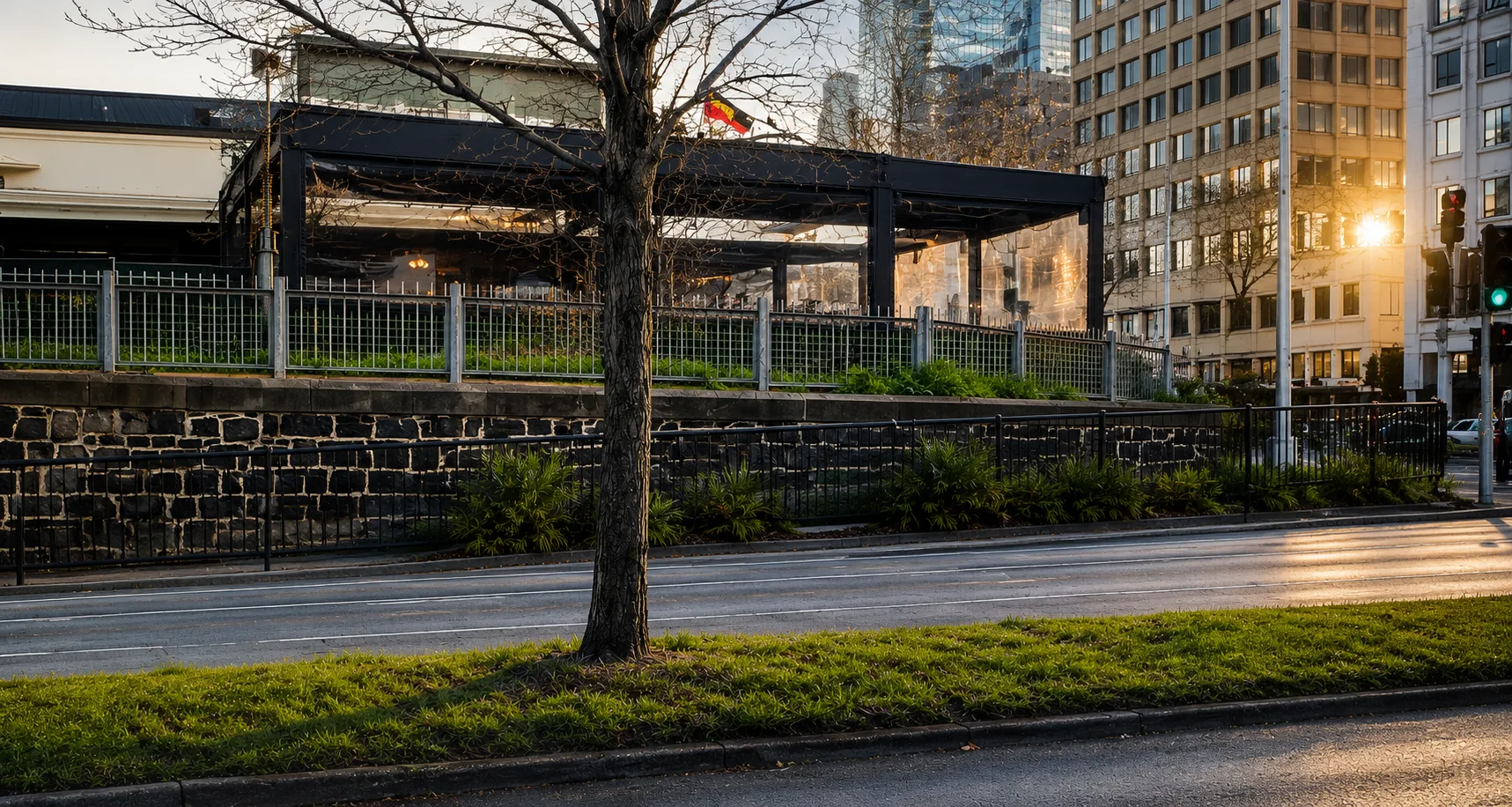
Heritage buildings on 170-year-old bluestone footings – The oldest buildings in Melbourne’s CBD were built during and immediately after the gold rush on bluestone rubble footings — the same material that lines the city’s famous laneways and built its earliest public institutions. Bluestone is durable, but 170 years of building load, Melbourne’s seasonal conditions, and in many cases multiple rounds of internal conversion and extension have taken their toll on the original footing mortar, the bearing capacity of the rubble courses, and the ground conditions beneath them. Crack assessment and structural repair in these buildings requires working with materials and construction methods that predate modern engineering standards by well over a century.
Heritage overlay — almost everything in the Hoddle Grid – The vast majority of Melbourne CBD’s older built fabric falls under heritage overlay controls at either state or local level. For foundation and structural repair, this means any work visible from the street or affecting the heritage fabric of a building needs to be carried out in a way that satisfies heritage obligations — the right materials, the right finish, and documented methodology. We’re experienced in working on overlaid properties and understanding what the heritage context means for the specific repair required.
Limited access — the laneway network – Melbourne’s CBD laneway network is one of its defining characteristics and also one of the most challenging environments for structural repair work. Many commercial buildings in and adjacent to the city’s laneways have no practical access for standard excavation equipment — the kind of access constraint that causes other contractors to decline the job. Harman Contracting’s specialist mini excavator capability was specifically developed for exactly these tight access situations. We regularly carry out underpinning and foundation work in sites where standard equipment simply cannot reach.
Variable ground conditions — basalt, alluvial clay, and reclaimed fill – The Melbourne CBD sits on genuinely variable ground. The Hoddle Grid and surrounding precincts sit broadly on basalt and clay, but the areas closest to the Yarra River, Southbank, the river end of Flinders Street, and the Docklands precinct sit on alluvial deposits and, in some cases, reclaimed land over former river mud and fill. Foundation behaviour in these riverside and reclaimed land sections is meaningfully different from the basalt-dominated core of the CBD, and it affects what repair methods are appropriate for each location.
Constant neighbouring construction — Metro Tunnel and high-rise development – The Melbourne CBD has been under continuous major construction for years — the Metro Tunnel project, ongoing high-rise residential and commercial development, and the constant excavation that comes with building a city vertically. Established buildings adjacent to major excavation work are exposed to ground vibration, changed groundwater behaviour, and altered drainage conditions that can affect foundations that were previously stable. For CBD building owners or managers seeing new cracking or movement in the context of nearby major construction, getting the building’s structural condition documented promptly is important both for identifying what’s happening and for establishing a clear pre-construction baseline if it isn’t already on record.
Commercial Underpinning – For heritage, mid-century, and converted commercial buildings across the CBD experiencing foundation settlement or structural movement.
Limited Access Foundation Repair – Our specialist mini excavator capability handles CBD laneway and tight-access sites that standard contractors decline. This is one of Harman Contracting’s core competencies and a reason CBD clients specifically seek us out.
Heritage-Aware Structural Repair – Experienced in working on heritage-overlaid buildings with the methodology, materials, and documentation that heritage compliance requires.
Screw Piling – Where deep load transfer is required in variable CBD ground conditions, including alluvial and fill sites near the Yarra corridor.
Crack Assessment and Repair – Establishing whether cracking in commercial buildings is cosmetic or structural, what’s driving it, and carrying out repairs once the cause is properly understood.
Pre-Construction Condition Documentation – For CBD building owners adjacent to planned major excavation or construction, establishing a documented structural baseline before works begin next door.