
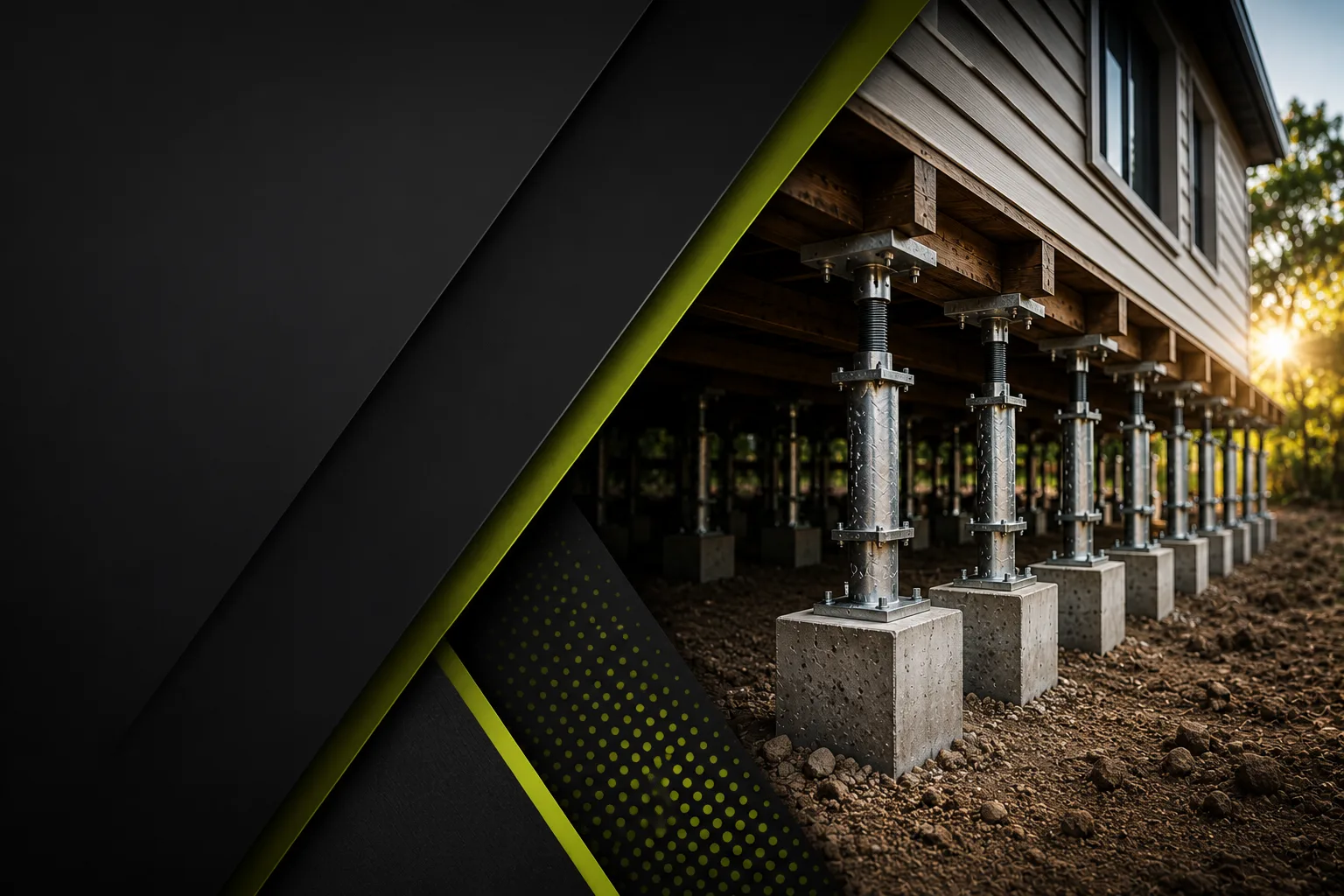
Underpinning Hughesdale — Foundation Repair for Melbourne's Most Compact Suburban Pocket

Hughesdale has a specific character that most of its neighbours don’t share. It’s a tiny suburb barely two square kilometres that was built out almost entirely in a single sustained push from the mid-1920s through to the early 1950s, following the opening of the railway station in 1925. That compressed development window, triggered directly by the rail connection, means the overwhelming majority of housing in Hughesdale was built within a roughly 25-year period. Almost all of it is detached or semi-detached. Almost all of it is now somewhere between 70 and 100 years old.
At Harman Contracting, we work regularly through Hughesdale and its immediate neighbours, and the foundation profile here is a consistent one — interwar bungalows and early post-war detached homes, many on original timber subfloor construction, sitting on ground conditions that vary more than you’d expect given how small the suburb is. Hughesdale sits in a transitional zone between Melbourne’s inner clay soils and the sandy ground further south-east, and that variability matters when it comes to diagnosing and repairing foundation problems correctly.

What Makes Hughesdale's Foundation Conditions Distinct

A single compressed building era — and its consequences – Most suburbs develop across multiple generations, which means their housing stock reflects a range of construction methods and footing types. Hughesdale is different. The railway station opened in 1925, the suburb subdivided and filled rapidly through the late 1920s and 1930s, and was largely built out by the early 1950s. What this means in practice is that the vast majority of Hughesdale’s detached homes were built in the same compressed window, and as a result, they’re all reaching a similar point in their structural lifespan at roughly the same time. Foundation issues that were isolated problems a decade ago are now turning up across multiple properties on the same street as that interwar and early post-war housing stock hits 80 to 100 years of age together.

Transitional ground conditions — not fully sandy, not fully clay – Hughesdale sits in a zone that doesn’t fall cleanly into either of Melbourne’s dominant soil categories. It’s not the highly reactive clay of the inner north, where seasonal swelling and shrinking is the main driver of foundation movement. But it’s also not the consistent sandy profile you find through Bentleigh and Bentleigh East further south. The ground through Hughesdale is more variable, with patches of sandy material sitting alongside areas with more clay content, and the local drainage history creating further variation across what is, remember, a very small geographic area. Properly diagnosing foundation problems in Hughesdale means assessing the specific ground conditions under the specific property rather than assuming what the soil is doing based on the suburb name alone.

Almost entirely detached housing on timber subfloor construction – Unlike Carnegie or parts of Bentleigh East where the 1960s flat and unit wave added a second structural era to the mix, Hughesdale’s original housing stock is overwhelmingly detached, and a large proportion of it was built on timber subfloor construction — floor frames carried on timber or concrete stumps sitting on pad footings. At 70 to 100 years old, those subfloor systems need attention. Original hardwood stumps have generally held up better than softwood replacements put in later, but deterioration is a common finding at this age, and subfloor settlement is one of the most frequent reasons Hughesdale homeowners call us.

A compact suburb means neighbouring activity affects you more – Because Hughesdale is so small and its housing density is relatively high for what is essentially a suburb of detached homes on modest blocks, development activity anywhere in the suburb is never very far from an established neighbouring property. Knock-down rebuilds and townhouse developments are happening throughout Hughesdale as its land values have risen, and the standard implications of nearby construction — changed drainage patterns, excavation vibration, and altered groundwater behaviour — apply in a suburb where you’re rarely more than a few blocks from something being demolished or built. If significant construction is happening or planned near your Hughesdale property, getting the foundation condition documented beforehand is a sensible precaution.

The level crossing removal and rail corridor properties – The Poath Road level crossing was removed in 2018 as part of the state government’s level crossing removal program, which involved significant construction and earthworks along the rail corridor through the suburb. Properties in the immediate vicinity of that work were exposed to the kinds of construction-related ground disturbance that can affect established foundations, including vibration, changed drainage, and soil compaction from heavy equipment working nearby. For homes close to the rail corridor in Hughesdale, it’s worth having any foundation cracking or movement that emerged during or after that construction period properly assessed rather than assumed to be coincidental.

Signs Your Hughesdale Home Has Foundation Problems

  • Floors that have developed a noticeable lean or springiness – In timber subfloor homes, almost always connected to stump deterioration or settlement.
  • Doors and windows that stick or bind, or have visibly moved out of square in their frames – A common sign of structural movement within the building.
  • Diagonal cracking at door and window corners – The standard sign of differential foundation settlement.
  • Gaps forming along skirting boards or between walls and ceilings – Often indicating movement in the building structure.
  • Cracking that appeared or worsened during or after the Poath Road level crossing construction – Particularly relevant for properties located near the rail corridor.
  • New cracking following demolition or construction on a neighbouring block – Especially relevant as knock-down rebuilds continue throughout the suburb.
  • Visible deterioration in subfloor stumps – Splitting, softening, or noticeably uneven heights on inspection.
  • Settlement concentrated in one part of the building’s perimeter rather than evenly distributed – Often indicating localised foundation or soil issues.

Foundation Repair for Hughesdale's Interwar and Post-War Homes

The interwar bungalow and early post-war detached home are structures that have generally held up well in the parts of the building you can see. Brick or weatherboard above ground, well-constructed by the standards of the time, these aren’t buildings in terminal structural decline. What they need at this point in their life is a subfloor and footing system that matches the quality of the structure sitting on top of it.

In the majority of cases we see in Hughesdale, that means one of two things: restumping work where the timber subfloor construction has deteriorated to the point of causing floor unevenness and structural movement, or underpinning of the perimeter footing where more significant settlement has occurred and the original strip footing is no longer providing adequate support. In some cases it’s both a building that has deteriorating stumps under the central floor area and a section of perimeter footing that has settled unevenly as well.

The important thing in Hughesdale’s variable soil conditions is not assuming what’s happening under the building before getting under it and actually looking. We carry out thorough subfloor inspections before scoping any job, because the full picture of what a Hughesdale home’s foundation is doing isn’t visible from the outside.

Pre-Purchase Foundation Inspections in Hughesdale

Hughesdale’s rising property values and limited housing stock mean that properties — especially original interwar homes on larger blocks — attract serious buyer interest and often sell quickly. The pressure to move fast in that market can push buyers toward skimping on due diligence, and foundation inspection is one of the things that gets cut when time is short.
It shouldn’t be. A Hughesdale home that’s 80 to 100 years old and hasn’t had a documented subfloor inspection in the recent past is a genuine unknown from a structural standpoint. We carry out pre-purchase foundation assessments that give buyers a clear picture of what they’re actually buying whether the subfloor construction is sound, whether the perimeter footing is stable, and if there are issues, what fixing them will realistically cost. That information is worth having before you exchange contracts, not after.

Our Services in Hughesdale

Underpinning – For Hughesdale homes experiencing foundation settlement in the perimeter footing, we install new footings appropriate to the specific ground conditions found on each property.

Reblocking & Restumping – The core service for Hughesdale’s interwar and post-war detached homes on timber subfloor construction. We replace deteriorated stumps and relevel floors affected by settlement.

Screw Piling – Where ground conditions call for it, particularly in pockets of sandier soil through the suburb, screw piling is frequently our preferred approach over conventional excavated methods.

Pre-Purchase Foundation Assessment – A thorough inspection giving buyers of Hughesdale’s older housing stock a clear, honest picture of foundation condition before committing.

Pre-Construction Foundation Condition Documentation – For owners of established properties next to planned demolition or development, we document the existing condition before works begin.

Crack Assessment & Repair – We identify whether cracking is cosmetic or structural, what’s driving it, and carry out repairs once the underlying cause has been properly addressed.

Suburbs We Service Around Hughesdale

Hughesdale sits within the City of Monash, and we work regularly across the surrounding area including:
Hughesdale, Murrumbeena, Carnegie, Oakleigh, Bentleigh East, Malvern East, Chadstone, Oakleigh South, and the broader City of Monash and City of Glen Eira areas.
If your suburb isn’t listed, get in touch we cover a wide stretch of Melbourne’s south-east and the chances are good we service your area.

Why Hughesdale Homeowners Choose Harman Contracting

  • Interwar and post-war detached home specialists – Genuine experience with the timber subfloor construction that defines Hughesdale’s housing stock.
  • Variable soil knowledge – Understanding Hughesdale’s transitional ground conditions and what they mean for the right repair method.
  • Construction-context awareness – Experience assessing and documenting foundation conditions in the context of nearby development and major infrastructure works.
  • 45+ years of combined experience – Across every type of Melbourne foundation problem.
  • Engineering certified – Every significant repair properly documented.
  • Fully insured – Registered builders with full public liability cover.
  • Free on-site quotes – A proper, specific assessment of your property before any commitment.

Underpinning Hughesdale

To a meaningful degree, yes. When a suburb’s housing stock was built in a concentrated window — as Hughesdale’s was through the late 1920s to early 1950s — those homes all reach a similar structural age at the same time. Subfloor systems and footings that were built to last 70 to 80 years are now hitting that milestone across a large proportion of the suburb simultaneously. It doesn’t mean every Hughesdale home has a problem, but it does mean that if you haven’t had a foundation inspection on an older property in the past few years, it’s worth doing.
In a home with timber subfloor construction, which describes the majority of Hughesdale’s interwar and post-war detached stock, springy or uneven floors almost always point to stump deterioration — the original timber stumps failing and allowing the floor frame to drop or flex unevenly. A subfloor inspection will confirm the extent of deterioration and what restumping is required. It’s one of the most common things we find in Hughesdale properties.
It’s possible. Major civil works of that kind involve significant earthmoving, vibration from heavy machinery, and in some cases altered drainage behaviour in the surrounding area. If cracking appeared or worsened in your property during or after that construction period and you haven’t had it properly assessed, it’s worth understanding what’s actually behind it rather than assuming it’s coincidental or cosmetic.
Demolition and construction next door can affect an established neighbouring property through vibration, changed surface drainage, and in some cases altered groundwater behaviour once a larger or differently positioned structure is in place. Getting your foundation condition documented before works begin next door gives you a clear baseline — useful both for identifying any pre-existing issues and for having documented evidence if new cracking appears once construction gets underway.
Call us to arrange a free on-site inspection. We’ll get under your Hughesdale property, assess the actual foundation condition, and give you a clear, honest picture of what’s happening and what it will take to fix it.