
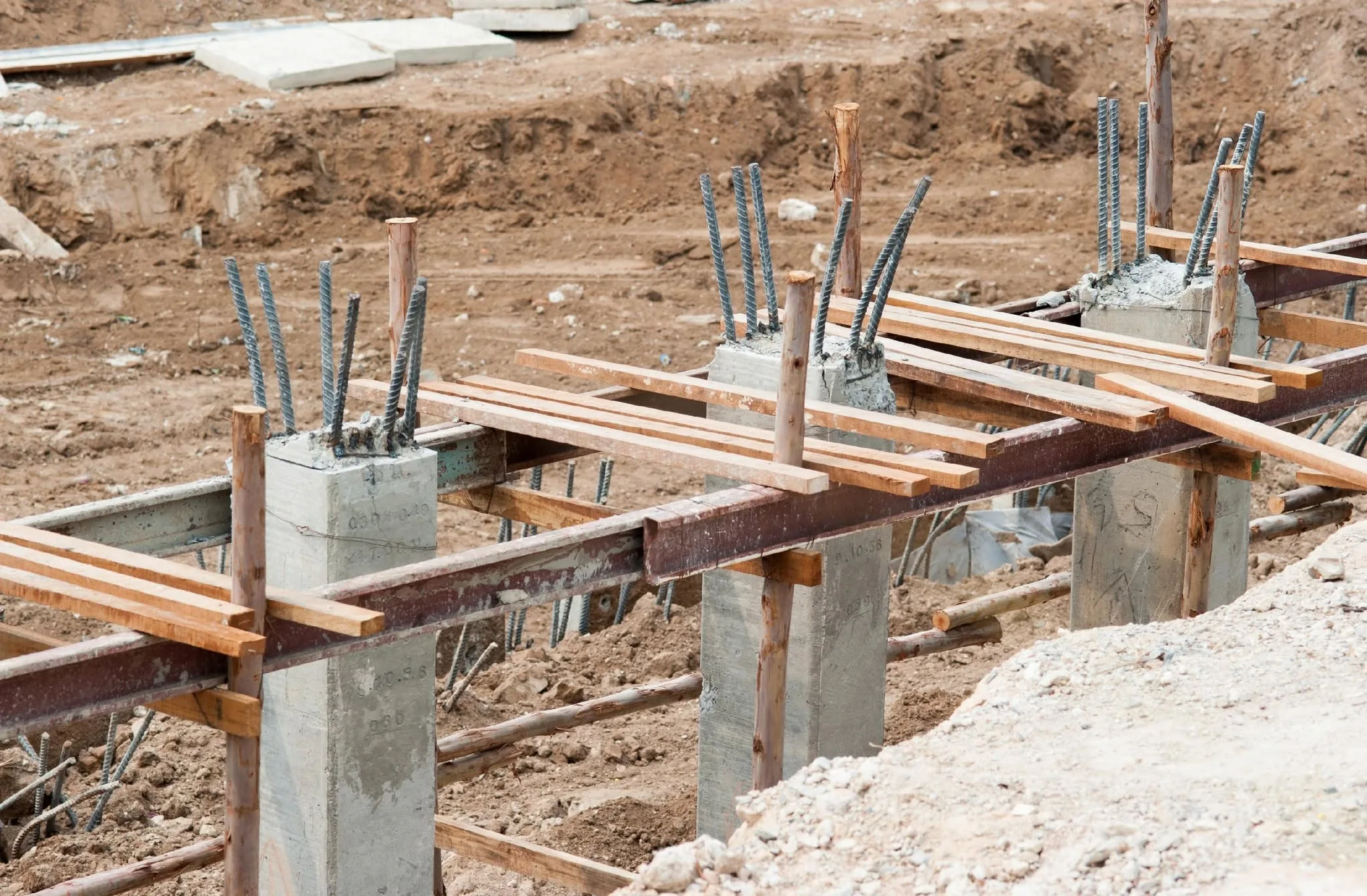
Underpinning Cranbourne — Foundation Specialists for One of Melbourne's Fastest-Growing Suburbs

Few Melbourne suburbs have grown as dramatically, or as quickly, as Cranbourne. From a population of around 1,800 in the mid-1970s to more than 14,000 within a single decade through the 1980s and 90s, Cranbourne’s transformation from a quiet racing and farming town into one of the south-east’s major residential centres happened at a pace that’s left its mark on the suburb’s housing stock in some very specific ways.
At Harman Contracting, we’ve worked extensively across Cranbourne and the surrounding growth corridor, and the foundation repair story here reflects that compressed development history directly a relatively small core of original township-era homes surrounded by a much larger volume of properties built during that explosive 1980s-90s growth phase, sitting on soil that’s notably different from the reactive clay found in many of Melbourne’s older, inner suburbs.

What Makes Cranbourne's Foundation Conditions Distinct

Sandier soil than much of inland Melbourne – Cranbourne’s soil character is well documented for a specific reason — when the Royal Botanic Gardens were looking for a second site to grow Australian native plants in the 1940s, they specifically chose land near Cranbourne because of its sandier soil and lower shade levels compared to the original Melbourne gardens, describing the area as “almost virgin heathland” with sandy undulations, tea-tree, and heath vegetation. That same underlying sandy soil character sits beneath much of Cranbourne today, behaving differently to the reactive clay that dominates foundation problems in suburbs like Berwick, Balwyn, or Canterbury. Sandy soil doesn’t swell and shrink as dramatically with seasonal moisture change, but it presents its own specific challenges — less reliable load-bearing capacity in places, a tendency for conventional excavated piers to be less stable, and vulnerability to erosion around foundations where drainage hasn’t been carefully managed.

A genuinely compressed growth period – Cranbourne’s population explosion through the 1980s and 90s means an enormous proportion of the suburb’s housing stock was constructed within roughly a fifteen-year window. This matters for foundation repair because it means a huge number of Cranbourne properties are now reaching a remarkably similar point in their structural lifespan at the same time, meaning foundation issues, when they emerge, often appear across multiple properties on the same street within a similar period, built by the same handful of volume builders using broadly similar construction methods.

A mix of original township homes and growth-era estate properties – Beneath the volume of 1980s-90s construction, Cranbourne retains a smaller core of older properties dating back to its days as a rural township centred around the racecourse. These older homes carry a different foundation profile entirely — generally smaller blocks, different construction methods, and often timber stump subfloors that have now had considerably longer to interact with the local soil than their newer estate-era neighbours.

Ongoing new estate development at the suburb’s edges – Cranbourne continues to grow, with newer estate development continuing in areas like Cranbourne South, where developments such as Botanic Ridge and Brompton have brought construction activity right up to the present day. This means Cranbourne’s foundation repair work spans an unusually wide range of property ages — from century-old township buildings through to homes only a handful of years old — each with a different relationship to the underlying ground depending on exactly when and how they were built.

Why This Matters for Underpinning Method Selection

The practical foundation repair implication of Cranbourne’s sandier soil character is similar to what we see in Melbourne’s other historically sandy areas conventional bored pier underpinning, which depends on an excavated hole remaining open and stable while reinforcement and concrete are placed, can be less consistently reliable in genuinely sandy ground than the clay conditions found across much of inland Melbourne.
This is one of the main reasons screw piling features so heavily in our Cranbourne work. Rather than relying on an open excavated hole that sandy soil can cause to slump or partially collapse, a screw pile is rotated directly into the ground, with the surrounding sand providing support throughout the installation. For Cranbourne specifically, this isn’t an exotic alternative method it’s frequently the most straightforward and reliable path to a properly engineered foundation repair.

Signs Your Cranbourne Home Has Foundation Problems

  • Diagonal cracks at door and window corners, the standard indicator of uneven settlement regardless of soil type.
  • Settlement that seems connected to drainage or erosion around specific points of the foundation, more characteristic of sandy ground than the broader seasonal heave and shrink typical of clay.
  • Cracking appearing across several similarly-aged homes on the same street, given how concentrated Cranbourne’s main growth period was.
  • Floors that have developed unevenness, particularly in the suburb’s older township-era homes on original timber stumps.
  • Doors and windows sticking or no longer closing properly.
  • Visible erosion or voids around the base of footings, more specific to sandy ground conditions.
  • Minor settlement cracking in newer estate-era homes, worth assessing properly rather than assuming it will resolve on its own, particularly while still within a builder warranty period.

Foundation Repair for Cranbourne's 1980s-90s Estate Homes

The volume-built brick veneer homes that make up such a large proportion of Cranbourne’s housing stock were constructed quickly, during a period of intense growth-area demand, generally using construction methods standard for their era. As these homes now reach 30 to 40 years of age, foundation settlement is an increasingly common finding — sometimes tied to the sandy ground conditions specific to this part of Melbourne, sometimes to original footing specifications that haven’t held up as well as hoped over several decades.
We assess each property’s specific situation rather than assuming a single explanation applies across the board. A targeted, well-engineered foundation repair on a 1980s or 90s Cranbourne home is generally a straightforward and cost-effective process — these are fundamentally solid buildings that simply need their foundations brought up to match the condition of the structure above.

Our Services in Cranbourne

Screw Piling – Our most frequently recommended method in Cranbourne given the area’s historically sandy soil profile — avoiding the reliability issues conventional bored piers can face in this ground type.

Underpinning – For homes across Cranbourne’s full range of construction eras, we install new footings appropriate to the conditions found on each specific property.

Reblocking & Restumping – For Cranbourne’s older township-era homes on original timber stumps, we replace what’s deteriorated and restore the building to level.

Foundation Repair for Estate-Era Homes – For the suburb’s large volume of 1980s-90s brick veneer properties, we assess and address settlement connected to either soil conditions or original construction specifications.

Crack Repairs – Carried out once the underlying foundation movement has been properly identified and addressed.

New Estate & Recently Built Property Assessment – For Cranbourne’s newer estate-era homes, particularly in growth areas like Cranbourne South, we assess settlement-related cracking with attention to builder warranty timeframes where relevant.

Suburbs We Service Around Cranbourne

Cranbourne sits at the heart of Melbourne’s south-east growth corridor, and we work regularly across the surrounding area including:
Cranbourne, Cranbourne North, Cranbourne East, Cranbourne West, Cranbourne South, Botanic Ridge, Clyde, Clyde North, Junction Village, Devon Meadows, Lyndhurst, Lynbrook, and the broader City of Casey council area.
If your suburb isn’t listed here, get in touch — we cover a wide stretch of Melbourne’s south-east growth corridor and the chances are good we service your specific location.

Why Cranbourne Homeowners Choose Harman Contracting

  • Genuine sandy soil experience – Recognising when Cranbourne’s specific ground conditions call for screw piling over conventional methods.
  • Growth-corridor experience – Across the full range of property ages from original township homes to brand new estates.
  • 45+ years of combined experience – Across every type of Melbourne foundation problem.
  • Engineering certified – Every significant repair properly documented, particularly relevant for newer properties within builder warranty periods.
  • Fully insured – Registered builders with full public liability cover.
  • Free on-site quotes – A proper, soil-specific assessment of your property before any commitment.

Underpinning Cranbourne

In many areas, yes. Cranbourne has a documented history of sandier, more free-draining soil compared to the heavier reactive clay found in many other parts of Melbourne’s south-east. This was specifically why the Royal Botanic Gardens chose a site near Cranbourne for their native plant gardens. This soil type behaves differently to clay and often calls for a different underpinning approach.
Conventional bored pier underpinning relies on an excavated hole remaining open and stable while reinforcement and concrete are placed. In genuinely sandy ground, that hole can be prone to collapse before the process is finished. Screw piles avoid this risk by being rotated directly into the ground, making them a more reliable method in Cranbourne’s specific soil conditions.
It’s a common finding, particularly given how much of Cranbourne’s housing stock was constructed within a similar compressed timeframe through the 1980s and 90s. As these homes reach 30 to 40 years of age, foundation settlement becomes an increasingly common and generally very fixable issue.
Some minor settlement cracking in the first few years after construction can be a normal part of a new home settling. However, it’s worth having any cracking properly assessed, particularly while the property may still be within a builder warranty period.
Call us to arrange a free on-site inspection. We’ll assess the specific soil and foundation conditions affecting your Cranbourne property and provide a clear, honest quote for the work involved.